- Four contenders face the cash-mobilisation test
As the New Patriotic Party (NPP) prepares to elect a new National Chairman, one question is emerging as central to its rebuilding effort: who can lead the party without depending primarily on its own coffers to finance the journey back to power?
The question, raised forcefully by former Finance Minister and Karaga MP Dr Mohammed Amin Adam, has shifted attention beyond political experience and internal popularity to the financial muscle, organisational reach and resource-mobilisation capacity of the four contenders.
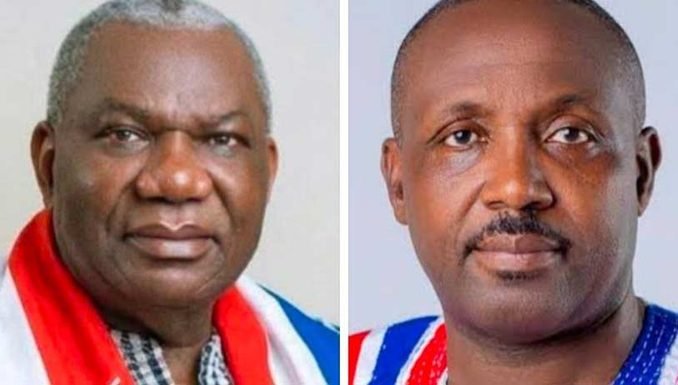
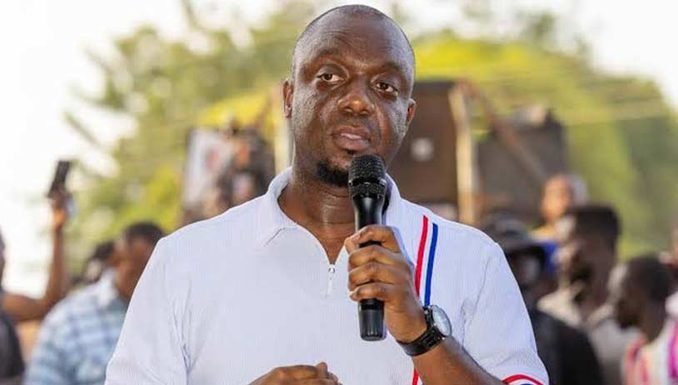
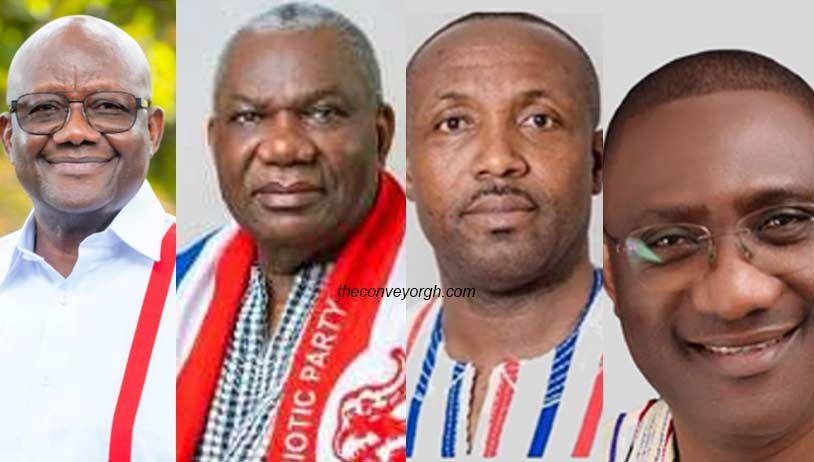
John Boadu, Sammy Crabbe, Paul Awentami Afoko and Boakye Agyarko are seeking to lead a party confronting the consequences of its 2024 electoral defeat and the challenge of rebuilding its structures ahead of the 2028 general election.
For Dr Amin Adam, the choice should be informed by competence, experience and the ability to raise funds.
In endorsing Mr Afoko, the former Finance Minister said the NPP needed a chairman who could help generate resources, particularly at a time when the party is in opposition and could not rely on the financial advantages associated with incumbency.
‘I have worked with Paul Afoko, and I know he is competent. He can also help raise funds for the party because we need money as a party in opposition,’ he said.
His intervention introduces a practical test for the contenders: beyond their promises, what networks, experience and strategies can they bring to a party that needs sustained funding for administration, grassroots mobilisation, communications and election preparation?
THE RESOURCE QUESTION
Political parties require more than campaign-season injections of money. Their operations depend on continuous funding for constituency structures, polling station activities, transport, communication, training and the maintenance of relationships with supporters and donors.
For an opposition party, the challenge is particularly acute. Without access to the resources and institutional advantages of government, it must build a sustainable financing model while retaining the confidence of its members and supporters.
The debate is therefore not simply about which aspirant has wealthy associates or can attract large donations. It is also about whether a chairman can establish reliable systems to raise, manage, and distribute resources transparently.
That distinction is important. A party that depends on occasional financial interventions may struggle to sustain its activities between elections, while one with an organised funding structure can plan beyond immediate political demands.
The four contenders bring different professional backgrounds, political experience and approaches to the challenge.
JOHN BOADU: THE PARTY ORGANISER
Mr Boadu enters the contest with extensive experience in the NPP’s organisational machinery, having served as National Youth Organiser, National Organiser before becoming General Secretary.
His time in those positions gives him familiarity with the party’s administrative structures, constituency networks and the demands of coordinating a national political organisation.
His campaign is built around experience and the capacity to strengthen the party’s machinery for the next electoral cycle.
The central question for his candidacy is how that organisational experience can be translated into a funding model capable of sustaining the party’s operations.
Can he mobilise financial support across the party’s national network, broaden the donor base and ensure that resources reach the grassroots consistently?
His experience in party administration provides a basis for assessing his organisational capacity, but the scale and sustainability of any proposed financing strategy remain important considerations for delegates.
SAMMY CRABBE: DATA, COALITIONS AND SUSTAINABLE FUNDING
Dr Crabbe, a former Greater Accra Regional Chairman and former National Vice-Chairman, has placed considerable emphasis on rebuilding the NPP’s electoral coalition and addressing weaknesses in its mobilisation structures.
He has argued that the party’s electoral performance depends on its ability to reach beyond its traditional strongholds and rebuild relationships with groups and communities across the country.
In a recent interview, he said the party needed stronger motivation and incentive systems for its workers, donors and other stakeholders.
He has also criticised what he describes as ‘episodic funding’, in which resources become available at particular moments rather than through a consistent financial system.
His approach places emphasis on institutional reform, data-driven constituency planning and the development of a more dependable funding structure.
Dr Crabbe says he uses data and artificial intelligence tools to analyse constituencies, identify electoral hotspots and assess demographic changes, to help local organisers develop targeted strategies.
His argument is that sustainable mobilisation requires both financial resources and a system that gives party workers a reason to remain active.
The test for his candidacy is whether these proposals can be converted into a practical national financing and organisational framework that can operate beyond campaign periods.
PAUL AFOKO: THE FUNDRAISING PITCH
Mr Afoko brings to the contest a blend of business acumen, political networks and national party leadership experience.
A businessman with interests in hospitality and other ventures, he is no stranger to either commerce or NPP politics. He previously served as National Chairman and has maintained close ties with influential figures in the party, including former President John Agyekum Kufuor, with whom he has worked closely over the years.
As part of his current campaign, Mr Afoko says he has consulted National Executives, regional structures, party elders, the parliamentary caucus, former Presidents Kufuor and Nana Akufo-Addo, and the party’s 2024 presidential candidate, Dr Mahamudu Bawumia.
His association with Mr Kufuor dates back years. Mr Afoko has openly identified with the former President’s tradition within the NPP and spoken of his influence during periods of political difficulty.
His business experience also features prominently in the case for his resource-mobilisation capacity. In July 2026, he clarified that although he does not own Kempinski Hotel outright, he has a business interest in the property. He said he devoted more time to managing his business ventures after his suspension from the chairmanship, including investments in hospitality and farming.
This combination of commercial experience, political relationships and institutional knowledge underpins Dr Mohammed Amin Adam’s endorsement of Mr Afoko. The former Finance Minister has specifically cited his competence and ability to raise funds for a party now operating from opposition.
Mr Afoko’s campaign is anchored on reunifying, rebuilding and strengthening the NPP ahead of 2028, with promises to heal internal divisions, restore confidence and reinforce grassroots structures.
The question, however, goes beyond his ability to attract wealthy supporters. Can he translate his business networks, political relationships and understanding of party operations into a broad, sustainable resource-mobilisation system?
For delegates, the test is whether those connections and his leadership experience can deliver consistent support for party administration, constituency structures, grassroots mobilisation and election preparation, without placing undue pressure on the NPP’s central coffers.
BOAKYE AGYARKO: EXPERIENCE AND PROFESSIONAL NETWORKS
Mr Agyarko brings a combination of private-sector experience and public administration to the contest.
A former banker and Energy Minister, he has professional connections in business and a long association with the NPP’s political structures.
His campaign has presented him as a candidate capable of appealing across internal divisions, restoring confidence among disillusioned members and strengthening the party ahead of 2028.
Former Interior Minister Henry Quartey, his campaign manager, has argued that the NPP needs a chairman who can unite different sections of the party and provide strategic leadership for its rebuilding.
Mr Agyarko’s professional background raises questions about how his business experience and networks could contribute to resource mobilisation and the development of sustainable party structures.
However, the value of those connections will ultimately depend on the funding arrangements, organisational systems and commitments his leadership can secure.
BEYOND THE DELEGATES’ VOTE
The chairmanship contest is taking place against the backdrop of the NPP’s broader effort to recover from its 2024 defeat and prepare for the 2028 general election.
The next chairman will be expected to work with the party’s flagbearer, national executives, regional and constituency officers, and grassroots organisers to restore confidence and coordinate the rebuilding process.
But the financial dimension could prove just as consequential as the political one.
A chairman who can mobilise resources consistently may help the party maintain its structures, support its workers and prepare for elections without placing disproportionate pressure on central party funds.
That does not mean the chairman must personally finance the party. Rather, the challenge is to build a system that attracts contributions, broadens participation, manages funds responsibly and ensures that resources are available when needed.
Dr Amin Adam’s intervention has brought that question into sharper focus.
For delegates, the decision on October 3 will therefore involve more than choosing among four experienced party figures. It will also determine which approach to leadership, organisation and financial sustainability the NPP wishes to pursue as it begins the long task of preparing for 2028.